Everything You Need to Know Before Visiting Iceland
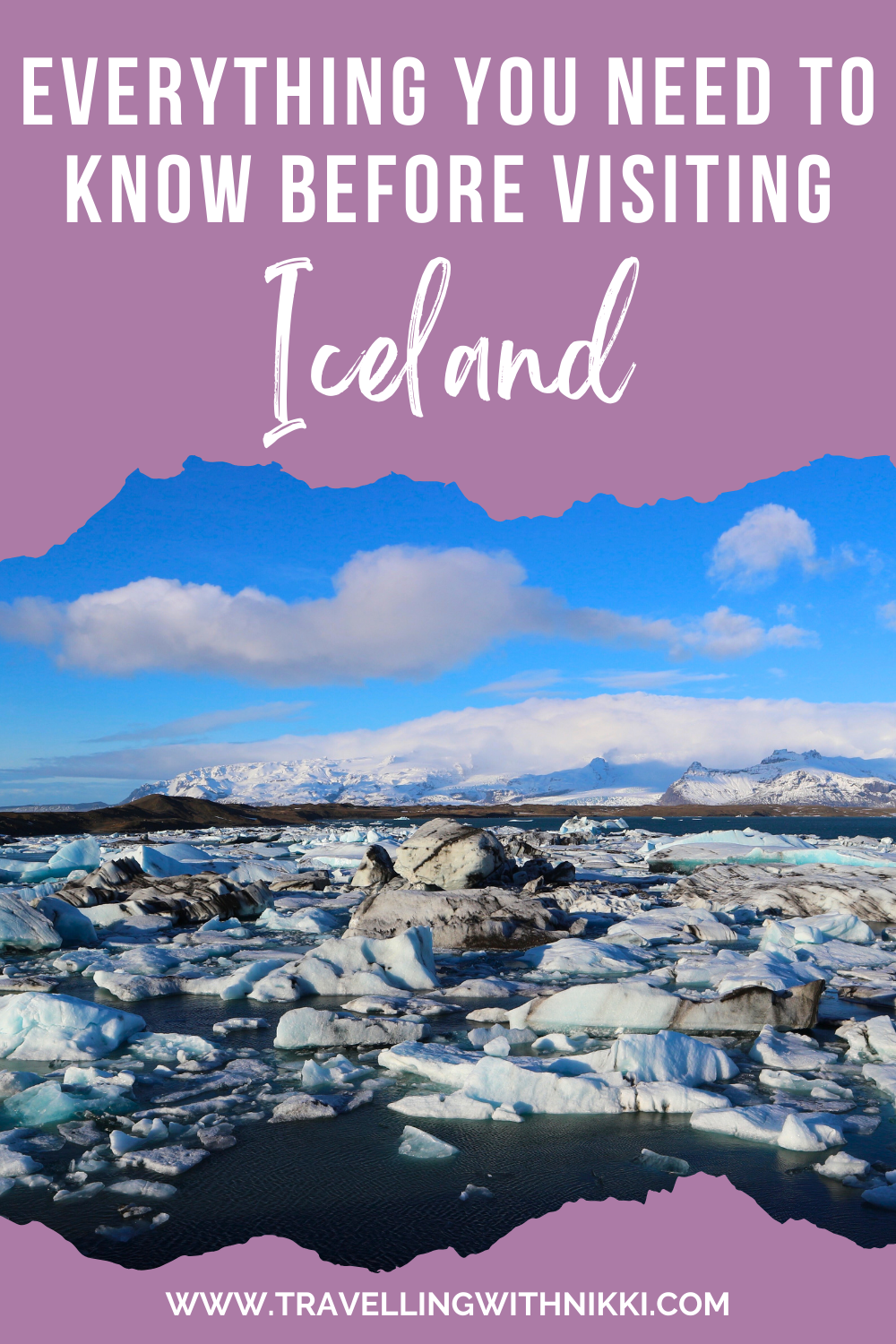
Visiting Iceland was one of my favourite weeks ever. I have never been to a more magical country and witnessed such incredible nature with my own eyes. It really is a special place and I can guarantee that if you visit, you will have an incredible time too.
There is nowhere else on earth like Iceland so a little research goes a long way when planning a trip. I have written this blog and travel guide and tried to include everything that you need to know before your visit as well as things to see and do, all up to date information, directions, advice, photos, tips and tricks to help you make the most of your trip to Iceland and make it an unforgettable experience.


When to Visit Iceland
Iceland is beautiful no matter what time of year you visit however there are some things to consider when deciding when to travel. Peak season is during the summer months when the days are long with better weather but it is also the most expensive as well as the busiest time of the year to go. Off season during the winter months will have shorter daylight hours with freezing temperatures but will be cheaper and quieter and will also give you a chance to see the Aurora Borealis (Northern Lights).
We visited Iceland in shoulder season during the month of March and found it to be perfect – the days were longer than the winter months giving us plenty of time to see what we wanted, the weather was better and there was still some snow to be seen but it was still quiet before the summer crowds arrived making our stay very enjoyable.
How Long to Spend in Iceland
No matter how long you spend in Iceland, you will not be able to see everything but this will give you the perfect excuse to plan another visit. If you only have a few days to spend in Iceland, you will only have enough time to visit Reykjavik, the Golden Circle and some parts of the south coast. If there are other areas of Iceland you want to explore, you will need to plan a longer stay – Iceland is much bigger than you think it will be and it takes time to get between places due to low speed limits and ever-changing weather conditions.


Where to Stay in Iceland
Whatever the time of the year that you stay in Iceland, it is important to book accommodation early especially if staying somewhere remote with limited availability. If booking a hotel look at packages that include flights as this could prove cheaper which it did for us. Also book a hotel that includes a free breakfast which will be essential before heading out for a long day of sightseeing and also help to save money.
Make Sure to Pack the Right Clothes
In Iceland there is no such thing as bad weather, just inappropriate clothing. The weather is always unpredictable no matter what the time of year and you can easily experience all four seasons in one day. You need to be prepared with the right clothes or you could find yourself having a pretty miserable time. The key is to make sure you have plenty of layers and have clothes that will keep you both warm and dry. I have written a blog post explaining exactly what shoes and clothing you need to take to Iceland.


Rent a Car When You Are in Iceland
The biggest piece of advice I will give to anyone is to rent a car whilst you are in Iceland which will give you the freedom that you want to explore the country in your own time at a relaxed pace and be able to stop wherever and whenever you want. It is easy to explore Iceland on your own so you do not need to pay for overpriced organized excursions and bus tours – the best part of having a car is being able to visit places early or late in the day when there are fewer crowds. If travelling during peak season, make sure to make a reservation for a car in advance.
When renting a car, make sure to take out the extra insurance offered for peace of mind as driving conditions in Iceland change constantly and with very little notice. If you are planning on driving on any of the remote F Roads in Iceland, you will need to rent a 4×4 vehicle as other cars are not permitted on these roads.


Driving in Iceland
Driving in Iceland is very easy however you should not drive if you do not feel confident or have no experience of winter driving or driving in strong winds or with limited visibility. Before driving anywhere make sure to check Road.is for all up to date driving conditions and for any road closures. Driving is on the right hand side of the road and do not speed (even in the middle of nowhere with no one else around) as there are speed cameras and the limits are strictly enforced.
Headlights must be on at all times even during daylight hours and do not stop in the middle of the road or at the side of the road to take a photo at any time – make sure there is somewhere safe to park even if that means driving further on and walking back. Make sure to fill up your car whenever you can and try not to let the tank go under half full as there might not be another petrol station for some time.


Keflavik Airport is Not in Reykjavik
Keflavik International Airport (KEF) is located 30 miles (50km) to the west of Reykjavik and by road the journey takes about fifty minutes with no traffic. Reykjavik Airport (RKV) is located close to the city centre but only operates flights to domestic destinations.
FlyBus runs from Keflavik Airport into Reykjavik city centre and can be booked online before you arrive and costs ISK3999 (£24 / €28 / US$30). A slightly less expensive option is the public bus (Number 55) which runs from Keflavik Airport to Reykjavik Bus Station but the journey takes much longer and it runs on a very limited timetable. The most expensive option will be taking a taxi which will cost a small fortune.
The cost of airport transfers is one of the many reasons to rent a car in Iceland. When leaving the airport after picking up a rental car, you cannot get lost – there is one road signposted Reykjavik. We used Google Maps for all of our directions when in Iceland and we not not make a single wrong turn as it worked perfectly.
If you need to access mobile data whilst visiting Iceland, you can purchase a travel E-Sim through Airalo. If you would like to use my referral code NIKKI8866 when signing up, you will receive £2.50 / US$3 off your first purchase.


Sightseeing in Iceland
Even though Iceland is expensive, sightseeing is not as there are no entrance fees to the majority of the sights including national parks, geysers and waterfalls. You can explore with only the cost of a rental car and fuel – the only things we had to pay for during our trip was parking at Thingvellir National Park and entrance to the Kerið crater, Blue Lagoon and Hallgrímskirkja.
The best advice is to start exploring early in the day and visit places before any large tours arrive. We arrived at Jökulsárlón Glacier Lagoon for sunrise and there was only a handful of other people there and it was perfect. As we were leaving and driving back to our hotel for a late breakfast, we saw the start of the line of buses on the other side of the road heading towards it. The opposite of this is to also visit places later in the day – the visited the Kerið crater late in the afternoon and again there was only a few people there.
Sightseeing in Reykjavik
Reykjavik is a beautiful city but it is tiny compared to other capital cities around the world. You do not need longer than a day to see Reykjavik itself and you can easily walk around the majority of the city in a very short time to explore the sights.


Photography in Iceland
I mention this in nearly everything I write but if you can bring a good camera to Iceland, do it and you will not regret it. The scenery is something else and you will want to take good photos – something that a phone or a tablet cannot do. Make sure to bring a variety of lenses, extra memory cards, batteries as well as a tripod for any low light photography.
However do not cross any lines or fences or ignore signs to get any photos – it’s Iceland and you will get beautiful photos and views no matter where you are standing. Do not try and “Do it For the ‘Gram” as many of the photos that you see online were taken illegally from restricted areas. If you have a drone, leave it at home as they are now banned in many places in Iceland.
Respect the Rules in Iceland
The most important thing you have to do whilst in Iceland is to read the signs and respect the rules as they are there for a reason. For example, if there’s a fence do not go beyond it, do not climb on the ice at Jökulsárlón Glacier Lagoon and do not go paddling (yes I did see this one with my own eyes) at Reynisfjara Black Sand Beach. You are not only risking your own life but the lives of any rescuers. Be considerate of everything and everyone around you and do not be an idiot or a contender for the next batch of Darwin Awards.


The Blue Lagoon: Yes or No?
Many people say to avoid the Blue Lagoon as it is expensive and can be crowded. However I have now visited twice and even though it is touristy, I have loved both of of my trips there. I found that most of the people visiting only stay in the area of the lagoon close to the main building where the bar and saunas are located. However the lagoon is large and if you move away from everyone into one of the other areas much further away, you can be by yourself and have peace and quiet. Reservations for the Blue Lagoon must be made in advance as you cannot just turn up without a booking.
As the Blue Lagoon is located close to Keflavik Airport, the majority of visitors either visit straight after landing into Iceland or on their way back to the airport. As we had our own car, we decided to book our visit on one of our full days which we found to be much more relaxing as we did not need to be constantly looking at the time and worry about missing a flight. I have written about everything you need to know about visiting the Blue Lagoon in this blog post.
Seeing the Northern Lights
You can do all the planning and preparation possible, check endless forecasts and stay in the middle of nowhere away from any light pollution but if luck is not on your side and the skies are not clear, there is no guarantee that you will see the Northern Lights during your stay.


Everything is Expensive in Iceland
When visiting Iceland you need to go with the frame of mind that everything will be more expensive than what you are used to elsewhere and to be prepared for that. Fortunately it is possible to save money by independently sightseeing, not drinking alcohol, cooking your own food (if staying in an Airbnb), avoiding taxis and not buying souvenirs amongst other things.
You Do Not Need Cash
The currency in Iceland is the Icelandic Krona however you do not need to bring hardly any cash with you as you can pay for nearly everything with card – even public toilets! We took more cash than what we needed and we ended up using it to pay for one of our meals out just to use it up. Do not travel to Iceland without a credit or debit card as you never know when you might need to use it – we used a petrol station in the middle of nowhere that only accepted cards.
Eating and Drinking in Iceland
Despite eating out every night we were in Reykjavik (and the food was so good), it was not cheap. You can help to keep food and drink costs down by bringing snacks with you to eat during days out and if you want a drink, buy any alcohol from the duty free shop when you land into Iceland. Make sure to bring a water bottle with you which you can fill from any tap – the water in Iceland is the cleanest, purest and freshest water you will ever taste and only clueless tourists buy overpriced bottled water. Also bring an insulated mug as hotel rooms have kettles and you can make a tea or coffee to take with you for during the day.


Leave Iceland Beautiful
Iceland is one of the most beautiful countries you will ever visit so make sure to leave it the way you found it for everyone else. It should go without saying but you should practice “Leave no Trace” so do not leave trash anywhere, do not disturb any nature or wildlife and wait to use public restrooms – the fact that some people do not do that last one is just disgusting.
Once you have visited Iceland, you will fall in love with the country and you will want to start planning your next trip immediately. I hope that this blog and travel guide helps you plan your own trip to Iceland. If you have been before or are planning a trip, let me know as I would love to hear all about your visit.
Have fun in Iceland.
Since this blog post was written back in 2020, some of the information may no longer be accurate or up to date though I try to keep it updated as much as possible. Be sure to do your own research and check official websites for the latest details before making any of your own travel plans.
Support Me and Buy Me a Coffee
Pin this Blog Post on Pinterest
Follow Me on Instagram
Follow Me on Bloglovin’
2 thoughts on “Everything You Need to Know Before Visiting Iceland”
Comment on this post
You might also like...
 Visiting the Blue Lagoon in Iceland
 What to Pack For a Trip to Iceland
 Our Trip to Iceland – Day Five
 Our Trip to Iceland – Day Four
 Our Trip to Iceland – Day Three
 Our Trip to Iceland – Day Two
 Our Trip to Iceland – Day One
 Visiting Sky100 in Hong Kong
 How to Visit Neuschwanstein Castle in Germany
 Disney Dream Transatlantic Cruise: Day One – Southampton
This is a great post, Nikki – thank you! I agree; Iceland is amazing. We visited in February and found it to be a perfect month despite the shorter days. One thing I learned is that Reykjavik is governed by the gulf stream so the city itself wasn’t as cold as we had anticipated. It’s a gorgeous country, everyone speaks English and they’re among the most welcoming people I’ve met.
Thank you for your comment – and yes it’s definitely one of the most gorgeous places in the world 🙂